Choosing a new hardwood floor
Solid or engineered hardwood?
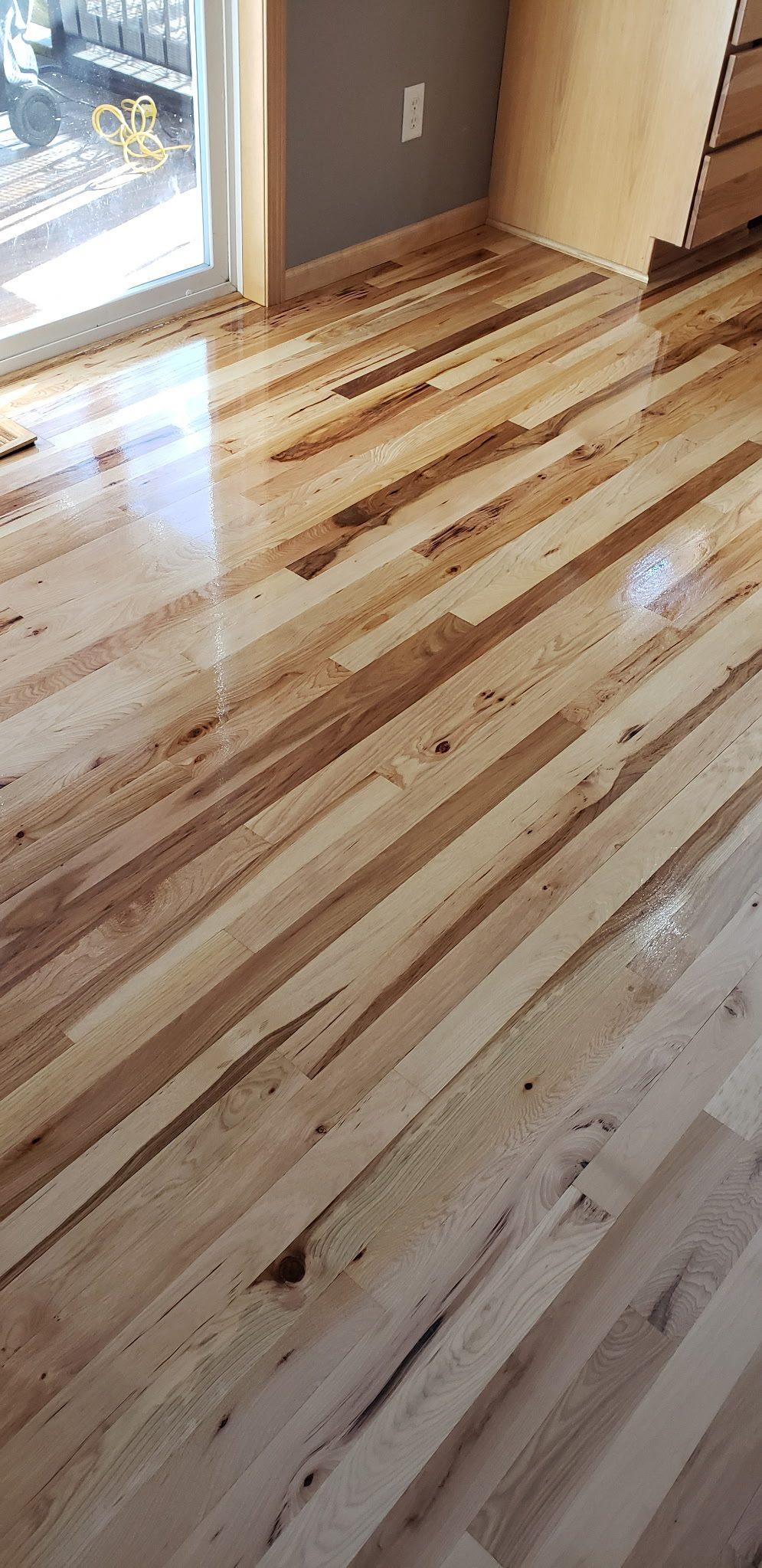
Solid hardwood is one piece of wood all the way through. It can be sanded and refinished several times, which is why floors from a hundred years ago are still in use. It does best on the main and upper levels of a house.
Engineered hardwood has a layer of real wood on top of a stable core. It handles changes in humidity better, so it’s the usual choice over concrete and in basements. On top it’s the same real wood, and you can’t tell the difference once it’s down.
Prefinished or finished on site?
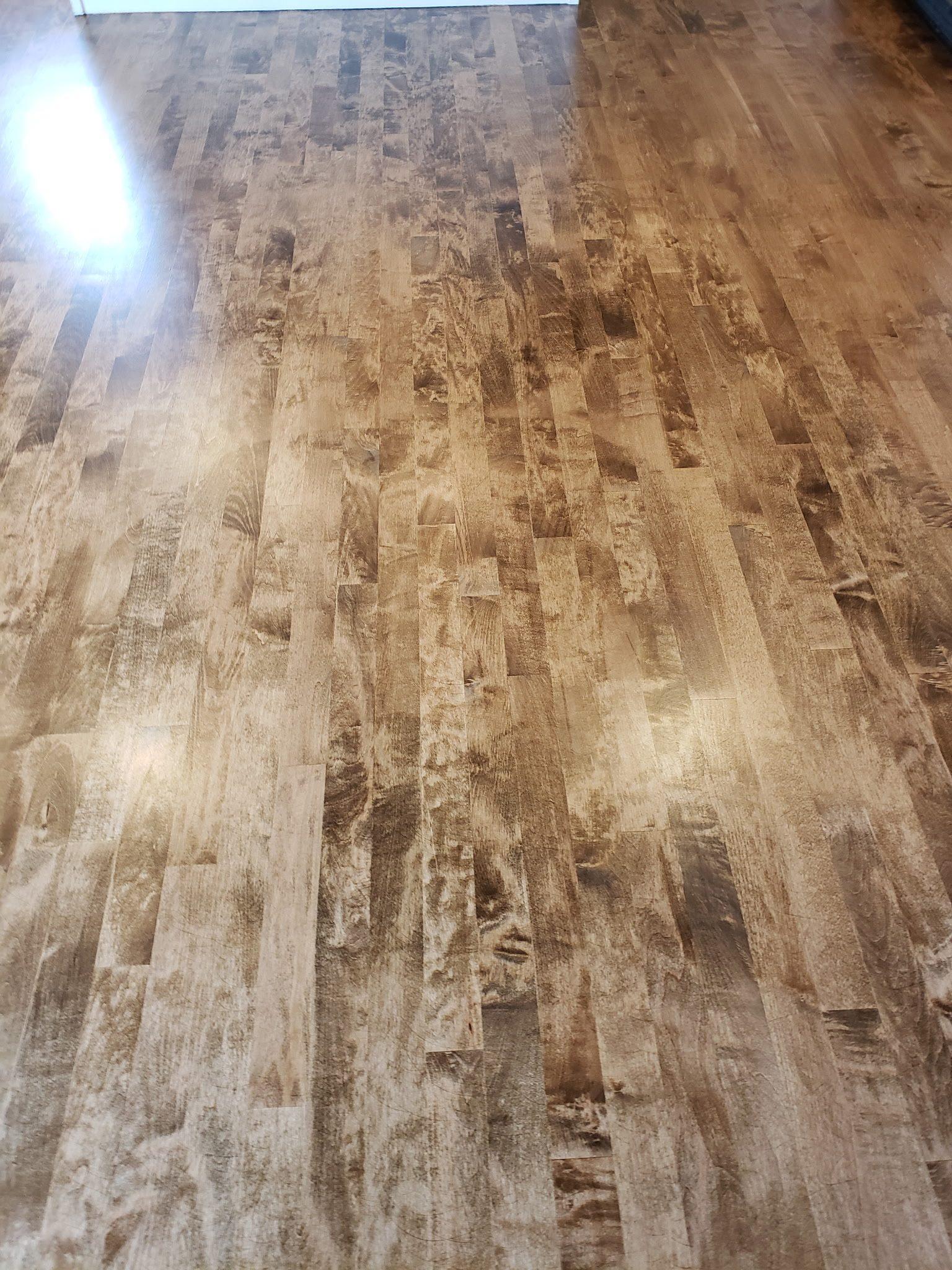
Prefinished boards arrive stained and coated from the factory. Installation is faster and there’s no drying time. Site-finished floors are sanded and finished after they’re installed, which gives a flat, continuous surface and any color you want.
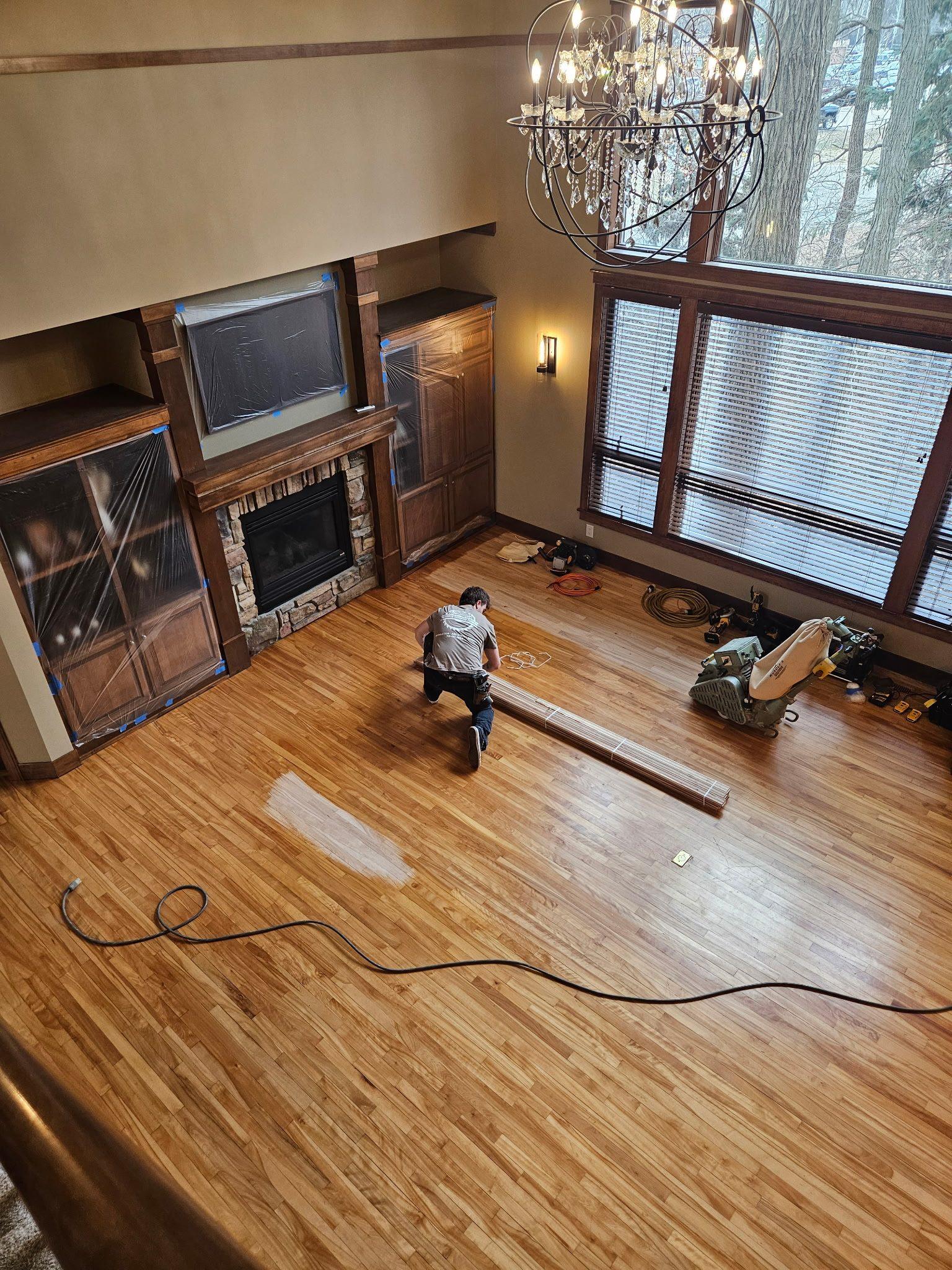
If you’re matching new wood to floors already in the house, finishing on site is usually the way to go. The new and old boards can be sanded and finished together so they read as one floor.
What happens to your furniture
Every new floor installation comes with a free storage pod for your furniture. It sits at your house for the length of the job, so you’re not stacking couches in the garage or renting a unit across town.
It’s the part of a flooring project people dread most, and it’s the reason we include it.
What affects the price
The wood you choose is the biggest factor: species, board width, solid or engineered, prefinished or site-finished. If there’s an old floor to remove and haul away, tear-out adds to the job.
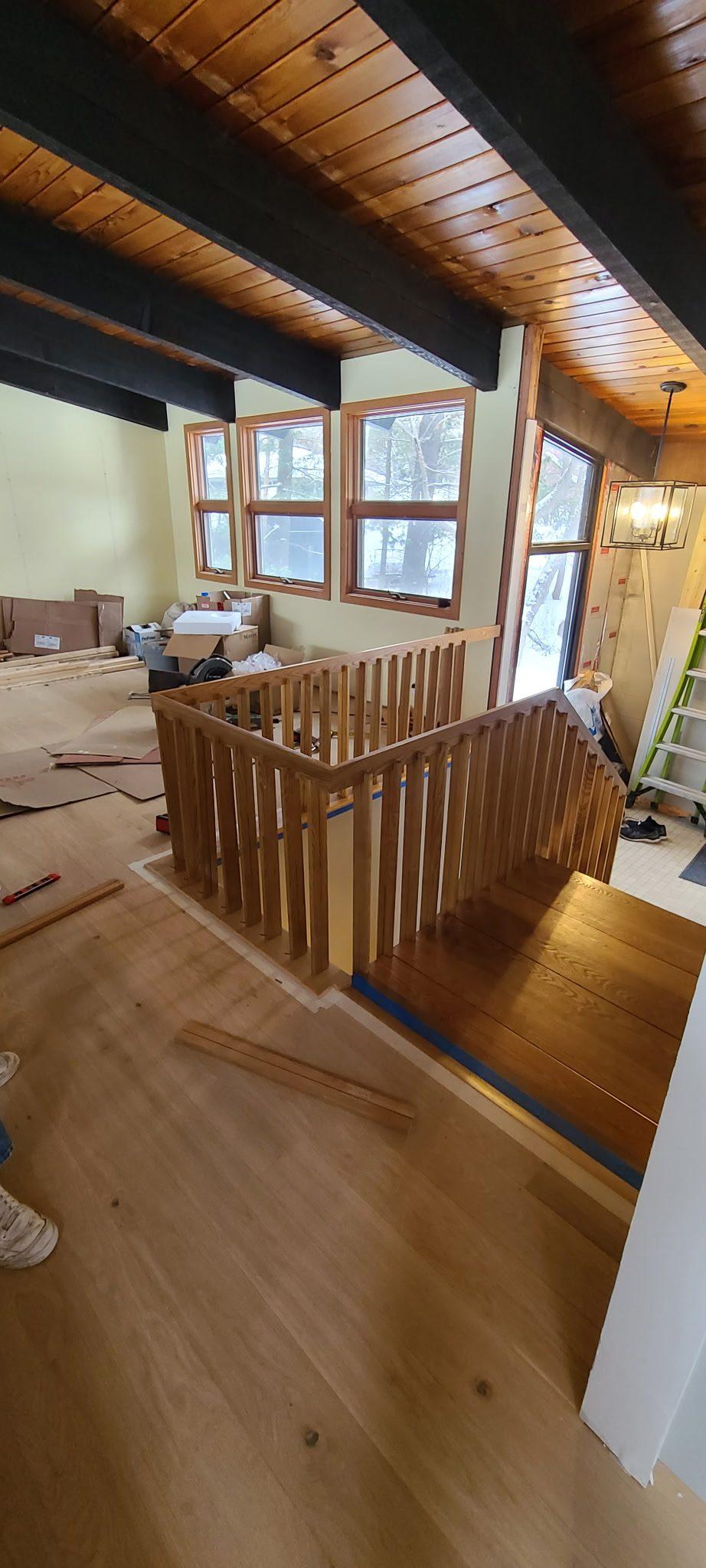
New stair treads are priced by the step. For a ballpark on your rooms, answer four quick questions in our instant estimate.