Buff and recoat, explained
Recoat or full refinish?
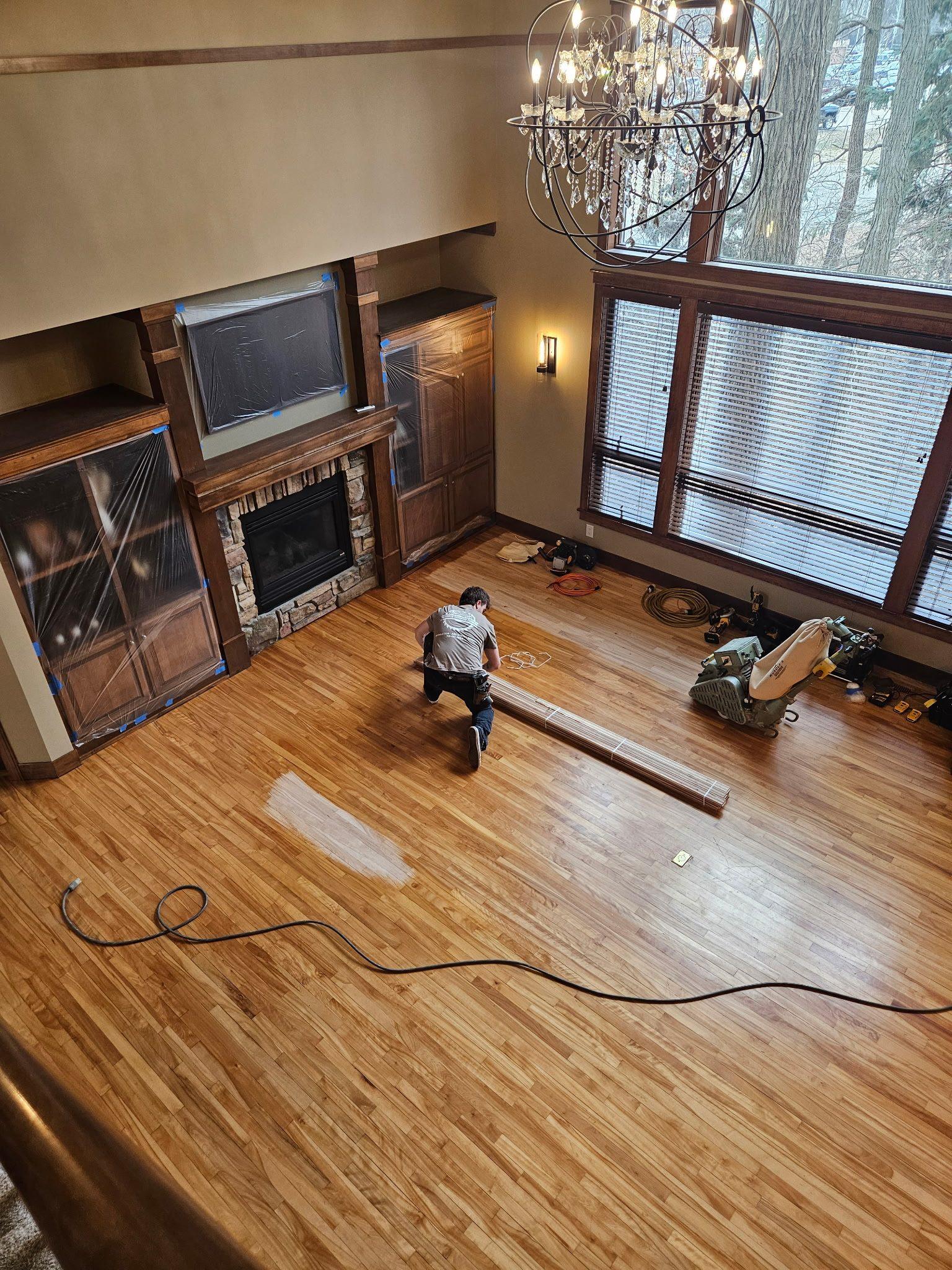
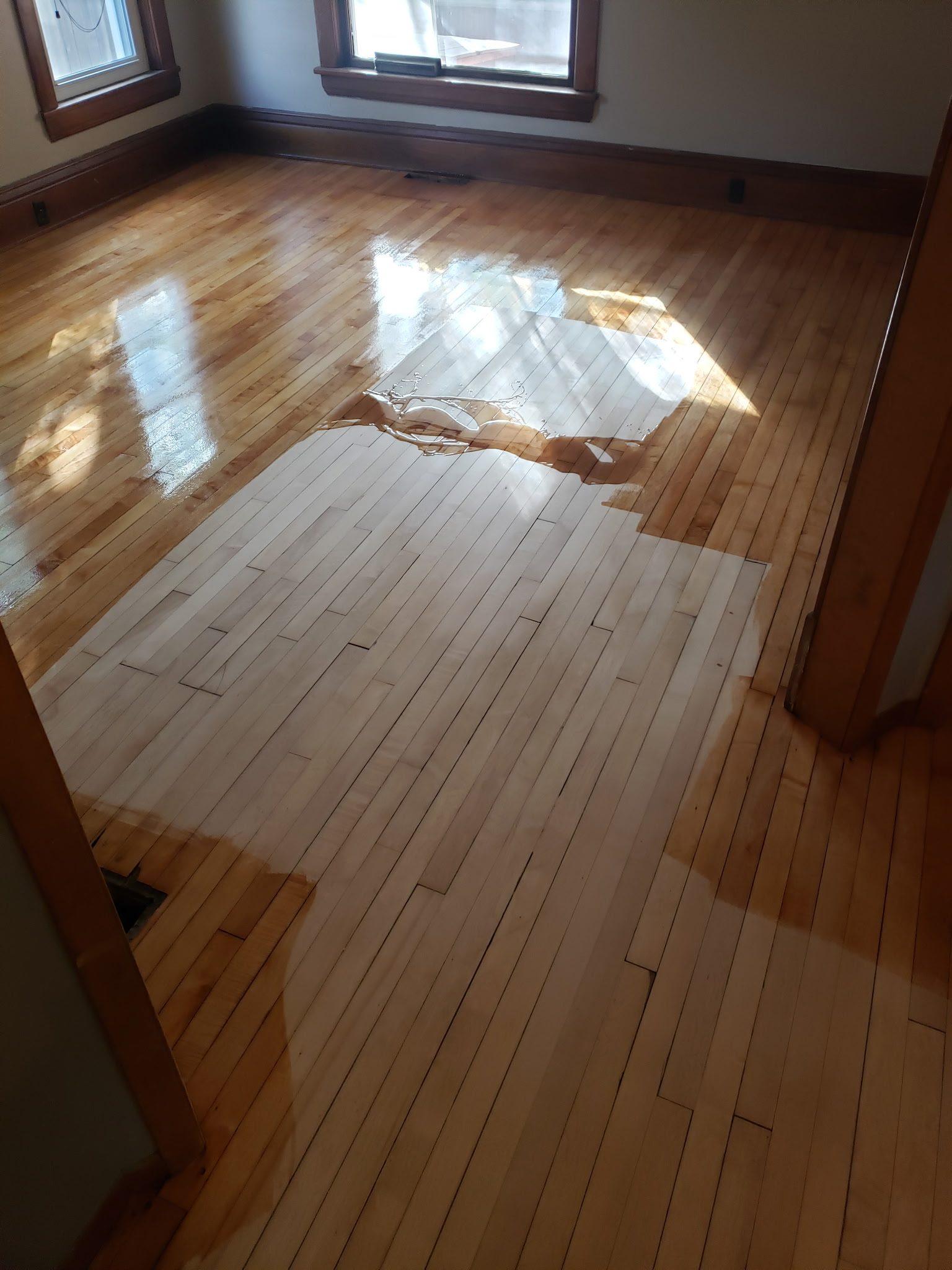
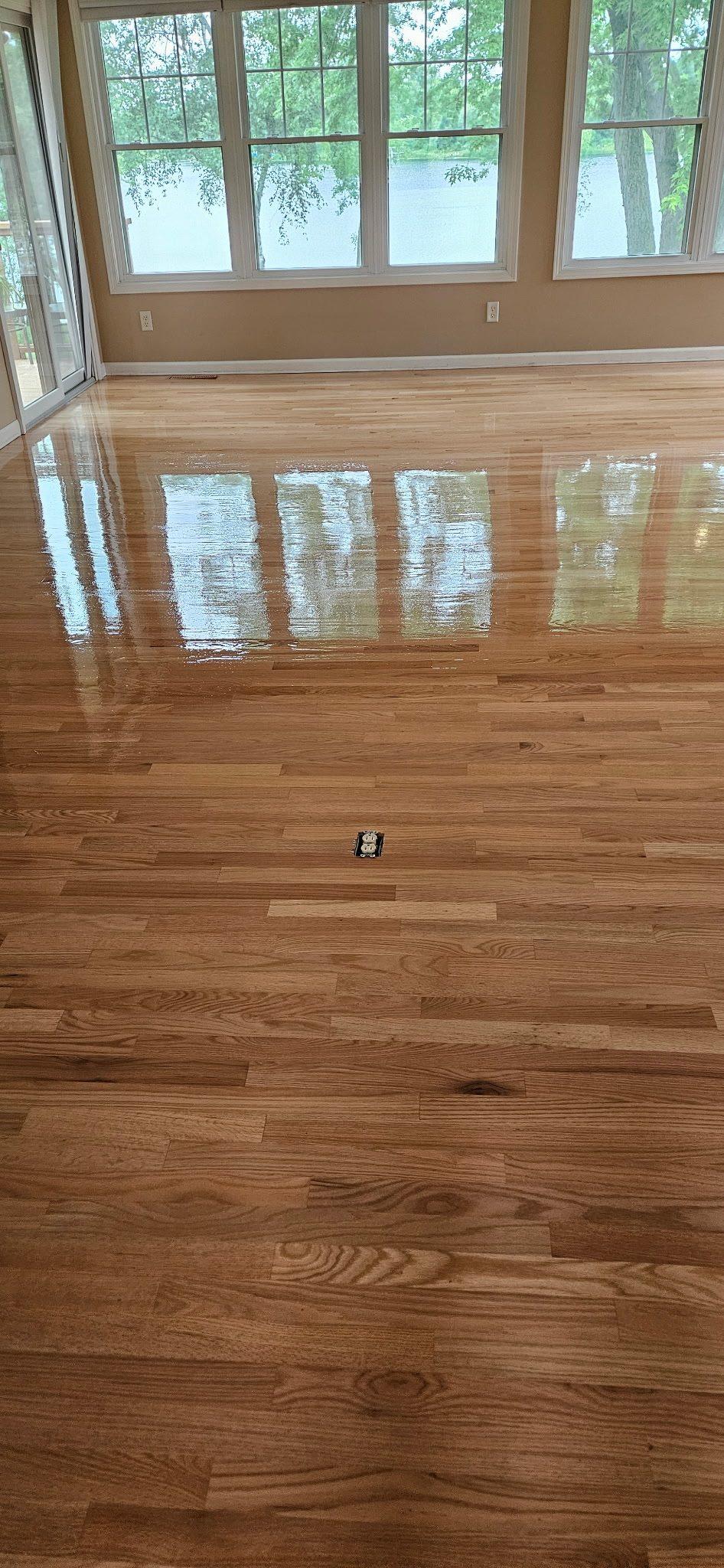
The difference is how deep the work goes. A full refinish sands off everything down to raw wood, so it can remove damage and change the color. A recoat stays in the finish layer, so it can only renew what’s there.
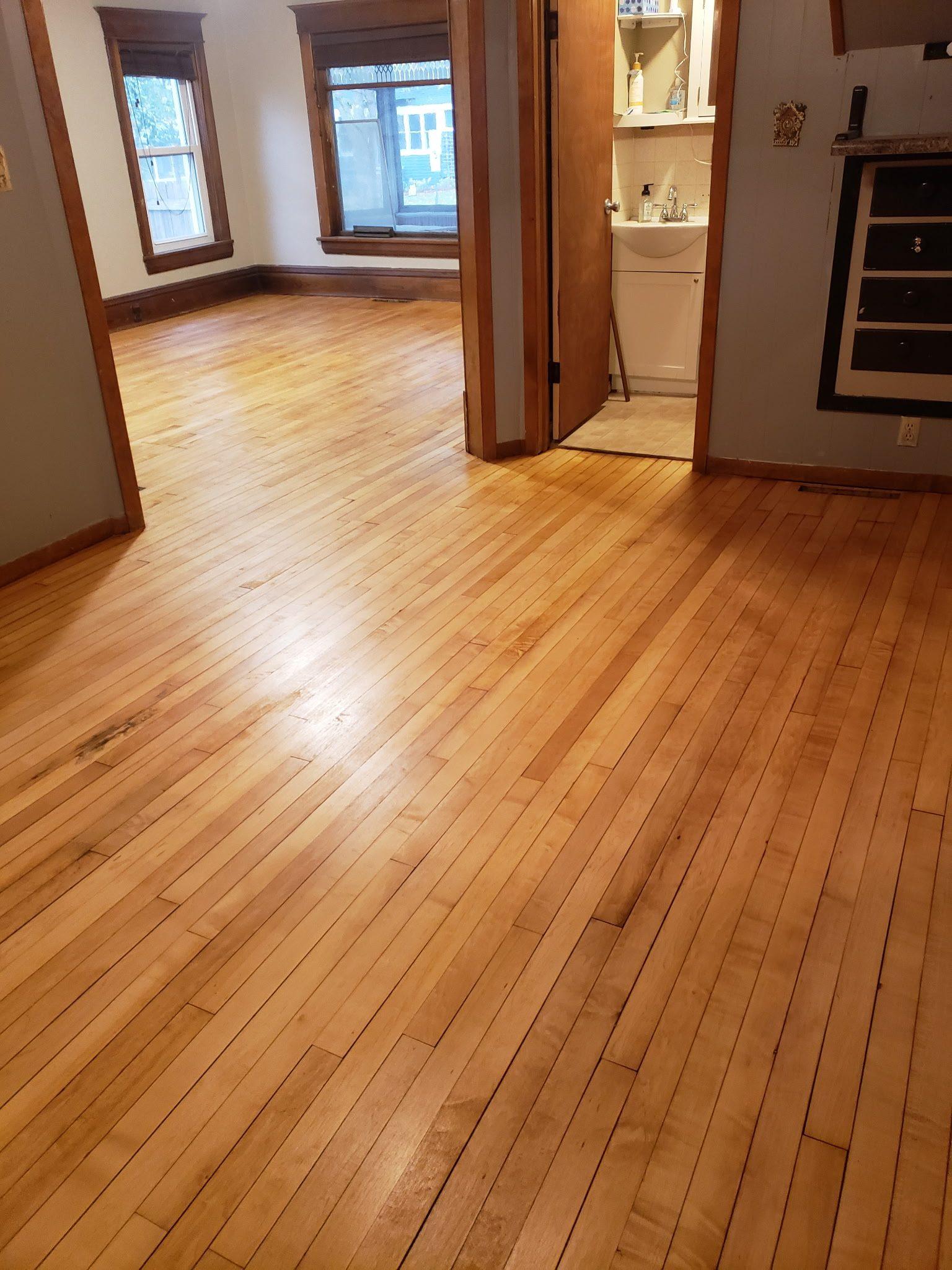
A simple test: look at the worst spot in your busiest hallway. If the wood there is still the same color as the rest and just looks flat, a recoat will probably do it. If it looks gray, dark or bare, the finish is gone and the floor needs a refinish.
How often should hardwood be recoated?
There’s no fixed number. It depends on how hard the floor is used. A busy house with kids and dogs wears through finish much faster than a quiet one. The goal is to recoat before the wear reaches the wood, because once it does, a recoat can’t fix it.
Recoating on time is the cheapest way to own a hardwood floor. Each new coat pushes the next full sanding further into the future.
What a recoat can’t do
A recoat won’t take out deep scratches, dents or stains, and it won’t change the color. It also may not bond to floors that have been waxed or treated with polishes and oil soaps, which is why we check the old finish before we quote one.
If we get to your house and a recoat won’t give you a result we’d be proud of, we’ll say so and price a refinish instead.
What affects the price
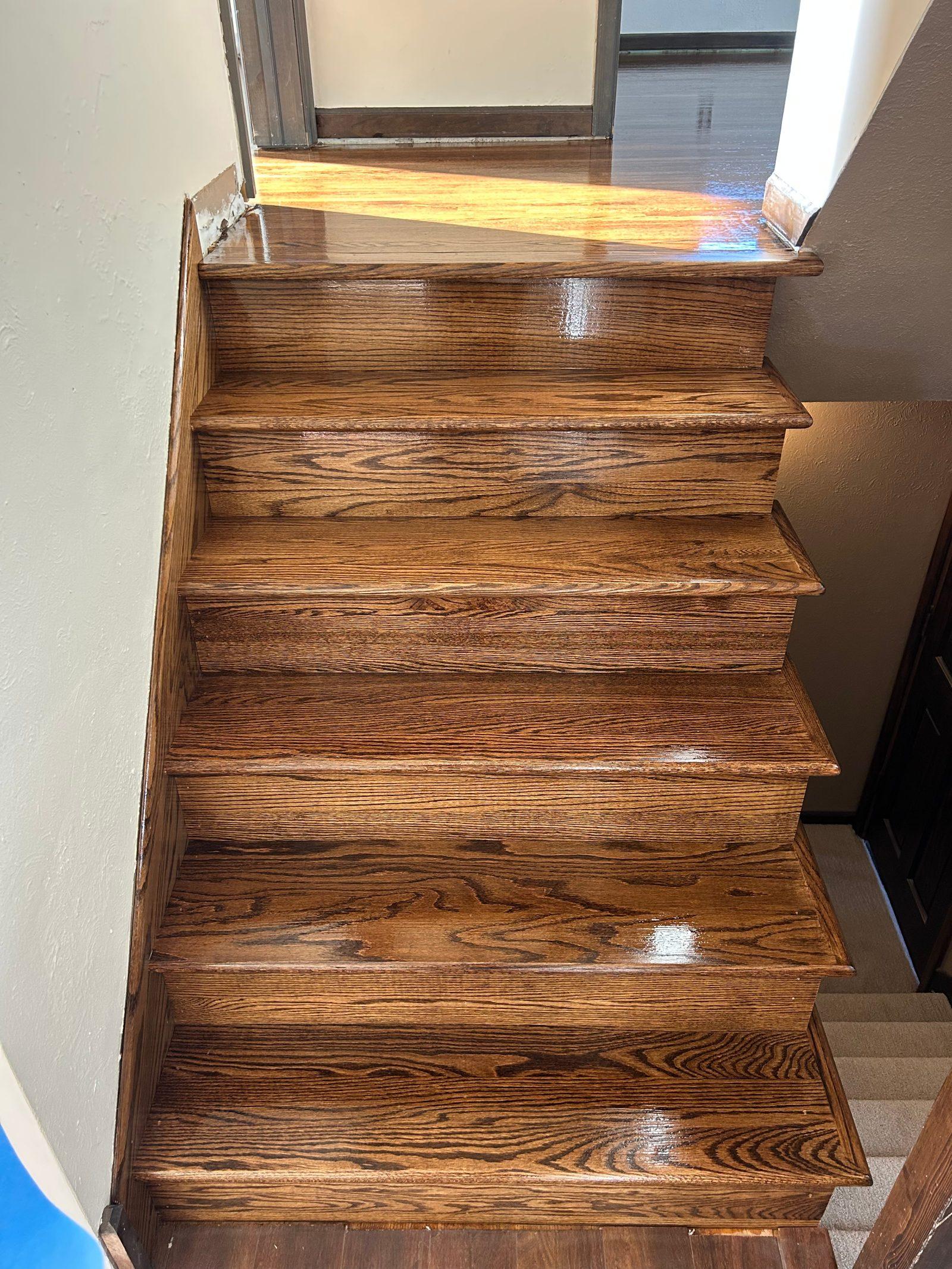
A buff and recoat costs well under a full refinish, because nothing is sanded to bare wood. The size of the floor is the main factor, and stairs are priced by the step.
For a ballpark on your floor, answer four quick questions in our instant estimate.